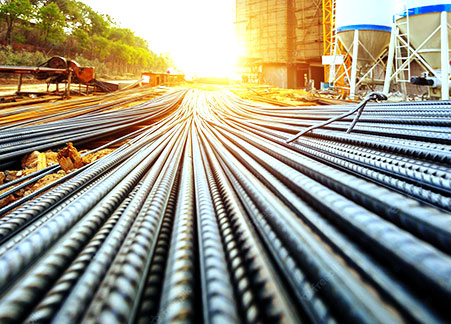
Rungta Steel TMT Bars are designed with the aim of contributing to the construction of a stronger India by providing excellent strength and reliable performance. These bars are manufactured using a meticulous process that involves the careful selection and utilization of high-quality raw materials. The raw materials used in the production of Rungta Steel TMT Bars undergo thorough quality analysis to ensure that they meet stringent standards.
By employing advanced manufacturing techniques and quality control measures, Rungta Steel ensures that their TMT bars are of the best-in-class quality. These bars adhere to all relevant quality standards, ensuring that they deliver exceptional performance and reliability in various construction projects. With their high tensile strength, superior ductility, and excellent bonding characteristics, Rungta Steel TMT Bars effectively resist the forces exerted on structures due to factors like heavy loads, seismic activities, and environmental conditions. This helps in preventing structural failures, ensuring the safety of the people and assets relying on these structures.
The primary objective of Rungta Steel TMT Bars is to reinforce and strengthen all types of construction structures, thereby enhancing their stability and security. These bars are extensively utilized in critical infrastructure projects such as airports, flyovers, ports, and metro subway tunnels. By incorporating Rungta Steel TMT Bars into these projects, the structural integrity and durability of the nation’s infrastructure are significantly improved.
Post the production stage, these products pass through a series of stringent quality tests to ensure unparalleled stability, longer durability and seamless workability. With the ISO and OHSAS certifications, the company promises to meet the varied requirements of the construction industry.
Rungta Steel TMT Bars come in grades of Fe500, Fe500D, Fe550 & Fe550D as per IS 1786
and sizes of 8/10/12/16/20/25/28/32/36/40 mm


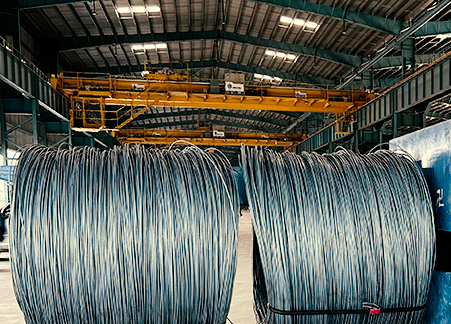
Rungta Steel Wire Rod is a type of hot-rolled long steel semi-finished product that is manufactured through a process called hot rolling. In this process, billets, which are small solid blocks of metal, are passed through continuous rolling mills where they are subjected to high temperatures and pressure. This rolling process shapes the billets into wire rods with a round cross-section.
After the wire rods are formed, they undergo a series of rigorous checks and tests to ensure their quality and consistency. These checks and tests may include dimensional measurements, tensile strength tests, and surface quality inspections. Only wire rods that meet the specified standards and requirements are approved for further processing.
Rungta Steel Wire Rod conforms to the standards of SAE 1010, 1008, and 1006 grades of low carbon steel. The chemical composition of these wire rods is carefully controlled to achieve the desired mechanical properties and performance. Low carbon steel is known for its excellent weldability, formability, and versatility.
Due to its specific chemical composition and manufacturing process, Rungta Steel Wire Rod finds application in a wide variety of construction and industrial sectors. These wire rods are used in various applications such as reinforcement in concrete structures, manufacturing of wire mesh and fencing, production of nails and screws, and general fabrication processes.
The versatility of Rungta Steel Wire Rod stems from its ability to be easily processed into different forms and shapes. It can be further processed through cold drawing, annealing, and other techniques to achieve specific properties or dimensions required for different applications.
In summary, Rungta Steel Wire Rod is a hot-rolled long steel semi-finished product with a round cross-section. It undergoes rigorous quality checks and conforms to low carbon steel grades. Its chemical composition and versatility make it suitable for a wide range of construction and industrial applications.
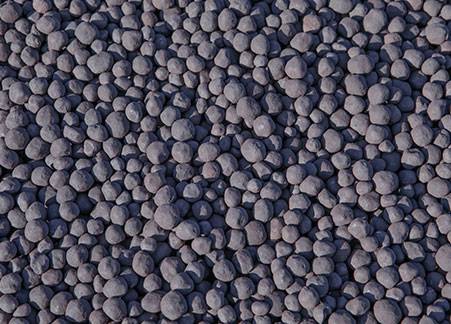
PelletThe company specializes in the production of iron pellets, which are small, solid balls of iron ore that are used as a key raw material in the steel industry. These iron pellets possess specific properties that make them highly suitable for various applications.
One important characteristic of the iron pellets is their cold crushing strength (CCS) of 210+ units. CCS refers to the ability of the pellets to withstand compression forces without breaking or disintegrating. The high CCS value indicates that these pellets are strong and durable, making them ideal for use in steel production processes.
Additionally, the iron pellets have a porosity of 24+ units. Porosity refers to the presence of tiny pores or open spaces within the material. The high porosity value means that the pellets have a significant number of these pores, which can be beneficial for certain applications. For example, in the direct reduced iron (DRI) manufacturing process, the porosity of the iron pellets helps facilitate the reduction of oxygen in the kiln. This process is essential for producing high-quality DRI fem (ferrous metallics) with a grade of 80+.
Moreover, the iron pellets have a mean particle size (MPS) of approximately 9.5-10 units. The particle size plays a crucial role in various industrial processes. In this case, the specific particle size of the iron pellets is designed to optimize their performance during the reduction process. The size range chosen helps ensure efficient reduction of oxygen in the kiln, contributing to consistent grade results in the final DRI fem product.
These high-quality iron pellets manufactured by the company offer several advantages to the steel industry and various sectors that rely on iron-based materials. They are considered as one of the best steel products available in Kolkata, nearby regions, and across India. The consistent grade and optimized characteristics of these iron pellets make them a reliable choice for construction materials, including the production of high-quality steel, infrastructure development, and other applications in the Kolkata area and its surroundings.
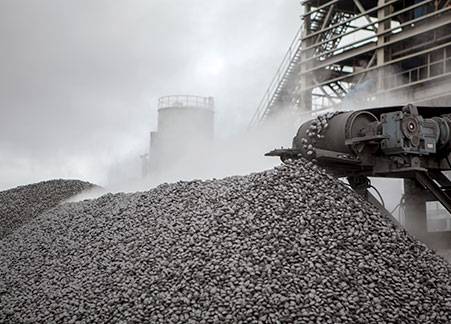
Sponge IronSponge iron, also known as direct-reduced iron (DRI), is a high-quality iron product that is used as a vital raw material in the production of steel. It is produced through a meticulous and eco-friendly process that involves the use of electrostatic precipitators. This process ensures the production of sponge iron with minimal environmental impact.
The production of sponge iron begins with the direct reduction of iron ore. In traditional iron-making processes like the blast furnace, iron ore is smelted to obtain pig iron, which is high in carbon content. However, in the case of sponge iron, the direct reduction process eliminates the carbon content, resulting in metallic iron.
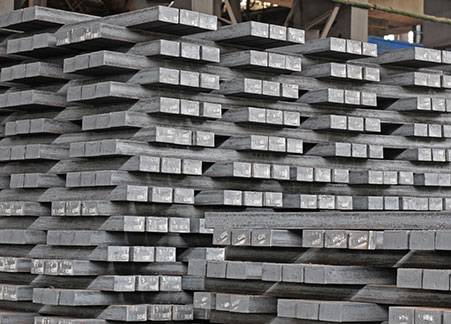
BilletsOur company specializes in the manufacturing of a diverse range of billets using two primary processes: continuous casting and extrusion. These processes take place within our advanced integrated steel plants. By incorporating state-of-the-art technology, employing expert professionals, and leveraging years of knowledge and experience, we ensure the production of defect-free casting billets that meet and adhere to the highest industrial standards.
Continuous casting is a modern method of billet production that involves the continuous solidification of molten steel into a semi-finished product. This process offers numerous advantages, including a high level of automation, improved efficiency, and enhanced product quality. By utilizing continuous casting, we can produce billets of various sizes and shapes with consistent quality and excellent surface finish.
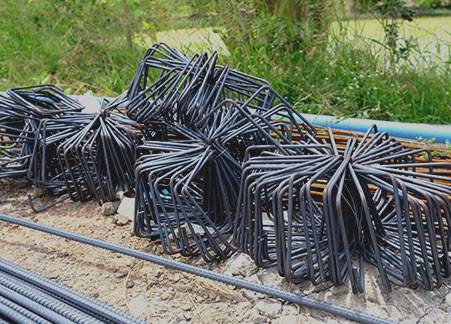
Stirrups IronHigh-quality stirrups iron for construction are produced in state-of-the-art facilities utilizing cutting-edge technology and sophisticated machinery by Rungta Steel. These manufacturing facilities employ advanced processes to ensure the production of stirrups that meet rigorous quality standards.
One notable characteristic of these stirrups is their 135° angle of rigidity. This specific design feature enhances the strength and structural integrity of beams and pillars in various construction applications. By incorporating stirrups with a 135° angle, the overall stability and load-bearing capacity of the reinforced concrete structures are significantly improved.
In terms of the materials used, the stirrups are made from TMT (Thermo-Mechanically Treated) rebar. TMT rebar is a type of steel reinforcement that undergoes a specialized heat treatment process to enhance its mechanical properties. The diameter of the TMT rebar utilized for the stirrups is 6mm x 8mm, adhering to the industry standards prescribed for such applications.
These stirrups offer numerous advantages in construction projects. Their high quality and precise manufacturing ensure consistent performance and reliability. They effectively reinforce concrete structures, making them more resistant to stresses, such as bending and shear forces. Additionally, the 135° angle of rigidity contributes to better load distribution and structural stability.
The use of advanced technology and top-tier machinery in the production of these stirrups ensures that they meet the demanding requirements of modern construction projects. Their strong and durable nature makes them suitable for a wide range of applications across various fields of construction, including residential, commercial, and infrastructure projects.
In conclusion, high-quality stirrups iron manufactured with advanced facilities and cutting-edge technology offer exceptional strength and rigidity. These stirrups, featuring a 135° angle of rigidity and made from TMT rebar with a diameter of 6mm x 8mm, meet stringent quality standards and effectively reinforce beams and pillars in construction projects. Their reliable performance and contribution to structural stability make them a preferred choice in the industry.
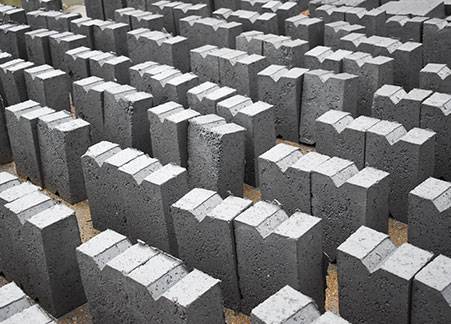
Fly Ash BricksThe content describes the production of top-tier quality fly ash bricks that are highly favored by organized sectors such as heavy industries, large townships, and high-rise buildings. These bricks possess unique features and merits, making them a popular choice in the construction industry. The manufacturing process of these bricks utilizes raw materials in an optimal manner and employs fully automatic techniques with state-of-the-art technology.
One of the key advantages of these fly ash bricks is their high physical strength, which ensures their durability and longevity in various construction projects. The bricks are produced using advanced manufacturing processes that result in exceptional consistency and uniformity. This uniformity is crucial for maintaining structural integrity and achieving a visually pleasing finish in buildings.
By utilizing fly ash, a byproduct of coal combustion, as a primary raw material, these bricks contribute to sustainable practices in the construction industry. Fly ash, which is usually considered a waste material, is effectively utilized in the production process, reducing its environmental impact. This makes the fly ash bricks an environmentally friendly alternative to traditional clay bricks.
The widespread acceptance of these top-tier quality fly ash bricks by organized sectors like heavy industries, large townships, and high-rise buildings showcases their reliability and performance. Their unique features, such as high physical strength, consistency, and uniformity, make them suitable for a wide range of construction applications.
Overall, the content highlights the benefits and production process of these top-tier quality fly ash bricks, emphasizing their suitability for organized sectors and their contribution to sustainable construction practices.
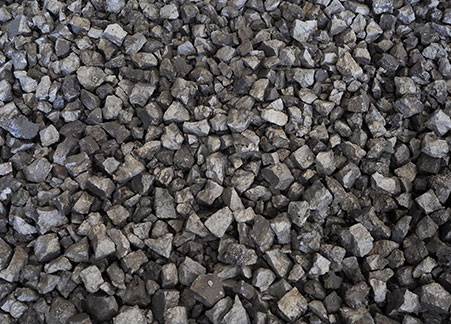
Silicon ManganeseRungta steel ‘Silicon Manganese’ is a cost-effective blend of silicon and manganese that is commonly used in the production of steel, particularly in the manufacturing of 200 series stainless steel. This blend is carefully fabricated within steel plants to meet specific requirements.
One important characteristic of this blend is its low carbon content. Carbon is a common impurity in steel, and its presence can affect the steel’s properties. By having very low carbon content, this blend of silicon and manganese creates an alloy that offers several advantages.
Firstly, the low carbon content helps improve the overall corrosion resistance of the steel. Stainless steel, in general, is known for its resistance to corrosion, and by using this blend, the resulting steel product becomes even more resistant to rust and other forms of corrosion. This is particularly beneficial in applications where the steel will be exposed to harsh environments or corrosive substances.
Additionally, the blend of silicon and manganese contributes to the steel’s strength and toughness. It enhances the steel’s ability to withstand mechanical stress and deformation, making it suitable for various structural and load-bearing applications. This blend helps ensure that the steel maintains its structural integrity even under demanding conditions.
Moreover, the cost-effectiveness of this blend makes it a preferred choice in the production of steel. Silicon and manganese are relatively abundant and less expensive compared to other alloying elements, making the overall manufacturing process more economical. This cost advantage allows the steel industry to produce affordable steel products without compromising on quality.

 Links
Links Address